PT. Sumatrani Research Indonesia
Berpikir, Berkarya dan Berarti

PT. Sumatrani Research Indonesia merupakan sebuah perusahaan yang diprakarsai oleh:
Dr. Maulana Majied Sumatrani Saragih, S.E., M.M., DMS,
Perusahaan bergerak di bidang penerbitan ilmiah dan pengembangan (research and development). Perusahaan ini hadir sebagai wadah profesional yang berfokus pada peningkatan kualitas publikasi akademik, penguatan budaya riset, serta pengembangan pengetahuan berbasis data dan bukti ilmiah
Journal of Economics, Management, Development, and Education (JEMDE)
is a peer-reviewed scientific journal that publishes research articles, theoretical studies, and conceptual analyses in the fields of economics, management, development, and education. The journal serves as a platform for academics, researchers, practitioners, and students to share innovative findings and insights that contribute to the advancement of knowledge and professional practice in these interdisciplinary areas.
Scope
The Journal of Economics, Management, Development, and Education (JEMDE) focuses on research and development in the fields of economics, management, development, and education.
Economics :
In economics, it covers topics such as micro and macroeconomics, economic theory, agricultural economics, economic policy, international economics, development economics, financial economics, and natural resource economics.
Management :
In management, its scope includes business management, human resource management, operational management, strategic management, marketing, finance, tourism, corporate management, property and valuation, as well as educational management.
Development :
The development field encompasses development studies, economic and social development, infrastructure development, sustainable development, regional development, international development, and spatial planning.
Education :
Meanwhile, in education, the journal focuses on economics education, management education, development education, technology education, vocational education, higher education, primary school teacher education (PGSD), and school education.
Bhinneka Journal of Multidisciplinary Knowledge (BJMK)
is a peer-reviewed academic journal dedicated to publishing high-quality research that integrates perspectives from multiple disciplines. The journal aims to provide a platform for scholars, researchers, practitioners, and professionals to disseminate innovative ideas, empirical findings, and conceptual analyses that contribute to the advancement of knowledge and the solution of complex global and societal challenges.
Reflecting the spirit of diversity and unity embodied in the word Bhinneka, the journal encourages interdisciplinary and multidisciplinary collaboration that bridges various scientific fields. BJMK welcomes original research articles, review papers, and conceptual studies that promote the integration of knowledge across different domains.
The scope of the journal includes, but is not limited to, the following areas:
- Social Sciences and Humanities
- Economics, Business, and Management
- Education and Learning Innovation
- Law, Governance, and Public Policy
- Science and Technology
- Engineering and Applied Sciences
- Information Systems and Computer Science
- Health Sciences and Public Health
- Environmental Studies and Sustainable Development
- Agriculture and Natural Resource Management
- Culture, Communication, and Media Studies
- Arts, Design, and Creative Industries
- Tourism, Hospitality, and Cultural Heritage
- Development Studies and Community Empowerment
- Interdisciplinary and Transdisciplinary Studies
Journal of Engineering, Applied Sciences, Arts, and Design (JEASD)
is a scientific journal that publishes research articles, conceptual studies, and scholarly reviews in the fields of engineering, applied sciences, arts, and design. The journal aims to serve as an academic platform for researchers, lecturers, practitioners, and students to disseminate research findings and innovative ideas that contribute to the advancement of science, technology, creativity, and innovation at both national and international levels.
JEASD is committed to promoting the integration of science, technology, arts, and design in addressing contemporary challenges, including digital transformation, innovation in the creative industries, and the application of technology in society. Through high-quality scientific publications and a rigorous peer-review process, the journal seeks to make a meaningful contribution to academic development, professional practice, and sustainable development.
The Focus and Scope of JEASD include, but are not limited to, the following fields:
1. Engineering
- Informatics Engineering and Information Systems
- Electrical and Electronics Engineering
- Mechanical Engineering and Manufacturing
- Civil Engineering and Infrastructure
- Industrial Engineering
- Information and Communication Technology
- Software Engineering
- Internet of Things (IoT) and Intelligent Systems
2. Applied Sciences
- Food Technology
- Nursing and Applied Health Sciences
- Pharmacy and Pharmaceutical Technology
- Public Health
- Environmental Technology
- Applied Biotechnology
- Agricultural Technology and Agroindustry
3. Arts
- Fine Arts and Visual Arts
- Graphic Design and Illustration
- Animation and Digital Media
- Music and Performing Arts
- Theatre and Drama
- New Media Art
4. Design
- Product Design and Product Innovation
- Visual Communication Design (VCD)
- Interior Design and Interior Architecture
- Fashion Design
- Multimedia and Interaction Design
- Technology-Based Design
Journal of Law, Policy, and Social Development (JLPSD)
is a scholarly journal that publishes research articles, theoretical studies, and conceptual analyses in the field of law and its intersections with various other academic disciplines. The journal aims to serve as an academic platform for researchers, scholars, practitioners, and policymakers to discuss the development of law within the contexts of society, economy, governance, and sustainable development.
The journal promotes an interdisciplinary approach that connects legal studies with other fields of knowledge to better understand the dynamics of regulation, public policy, and the implementation of law in society.
Scope
The scope of the journal includes, but is not limited to, the following areas:
1. Law and Public Policy
- Constitutional Law
- Administrative Law
- Public Policy
- Legal and Regulatory Reform
2. Law and Economics
- Business Law
- Commercial and Trade Law
- Investment Law
- Law and Economic Development
3. Law and Technology
- Cyber Law
- Personal Data Protection
- Information Technology Law
- Artificial Intelligence Regulation
4. Law and Society
- Sociology of Law
- Law and Human Rights
- Law and Culture
- Law and Society
5. Law and Environment
- Environmental Law
- Natural Resources Law
- Law and Sustainable Development
6. Law and Criminology
- Criminal Law
- Criminology
- Criminal Justice System
- Restorative Justice
7. Law and Tourism
- Tourism Regulation
- Cultural Heritage Protection Law
- Creative Economy Law
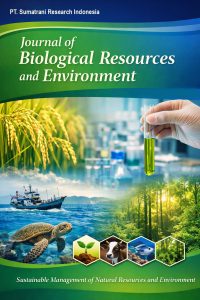
Journal of Biological Resources and Environment
The Journal of Biological Resources and Environment focuses on the publication of scientific research articles, conceptual studies, and innovations related to the integrated and sustainable management and utilization of biological resources and the environment. The journal promotes a multidisciplinary approach that integrates biophysical, economic, social, and technological aspects in natural resource management.
The primary focus of this journal is to advance scientific knowledge that supports the balance between the productivity of biological resources and environmental sustainability, as well as its contribution to sustainable development and community welfare.
The scope of the journal includes:
1. Agriculture
Covers research in plant cultivation, agricultural production systems, agribusiness, farm management, and technological innovations that enhance productivity and efficiency in a sustainable manner.
2. Animal Science
Includes livestock production and reproduction, animal nutrition and feed, livestock management, animal health, and the development of sustainable and welfare-oriented livestock systems.
3. Fisheries
Encompasses aquaculture, capture fisheries, fisheries resource management, fisheries technology, as well as socio-economic and institutional aspects of the fisheries sector.
4. Marine Science
Covers marine ecosystems, oceanography, coastal and marine resources, coastal conservation, and sustainable marine resource management.
5. Forestry
Includes forest management, conservation and rehabilitation of forest resources, silviculture, agroforestry, community-based forest management, and sustainable forest ecosystems.
6. Environmental Science
Covers ecology, climate change, environmental pollution, waste management, natural resource conservation, as well as policies and strategies for sustainable development.
Published by PT. Sumatrani Research Indonesia